RECLAIM
THE
CLAY

For over 10,000 years, clay has been used as a fundamental building material. Although it has been largely replaced by industrial materials in Western countries, its outstanding ecological properties have led to a resurgence since the 1980s, positioning it as a building material of the future.
Rammed earth constructions are characterized by high compressive strength but low tensile strength, a structural contrast that forms the starting point of this material study.


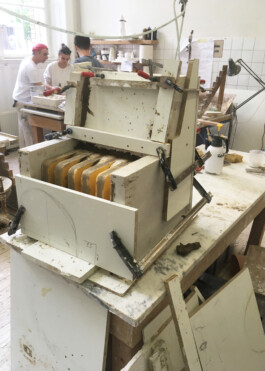
To ensure basic tensile strength, the formwork was produced using an interlocking layered structure of coarse-meshed jute fabric. This material choice is critical: the rough surface of the natural fiber absorbs a high volume of clay, while the individual layers interlock during drying shrinkage to form a cohesive, heterogeneous unit.
Beyond this material reinforcement, the geometric curvature of the closed formwork is essential for stability. The synergy between this geometry and the layered structure enables a lightweight construction that achieves high load-bearing capacity despite its minimal dead weight.


The resulting objects demonstrate the structural and architectural potential of clay and position it as a relevant material for sustainable and future-oriented construction.

WORK
IN
PROGRESS
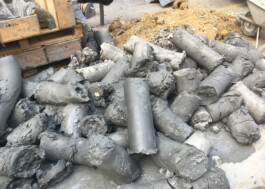
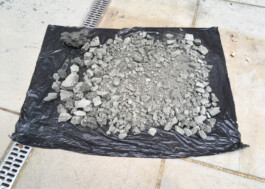
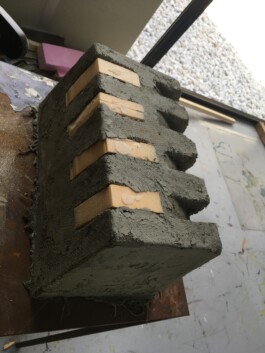
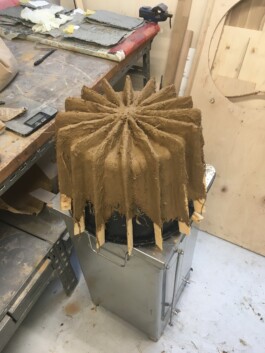
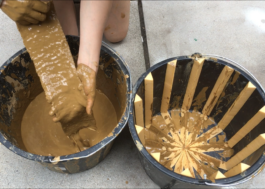
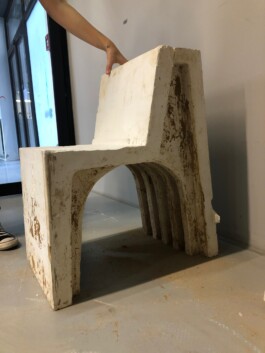
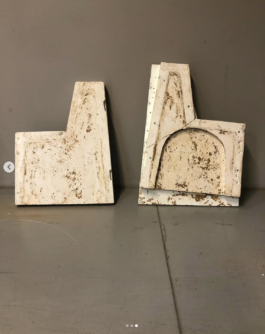
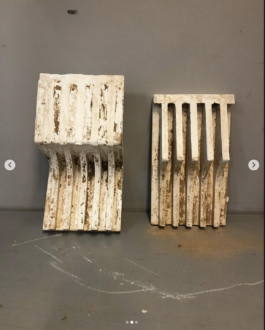
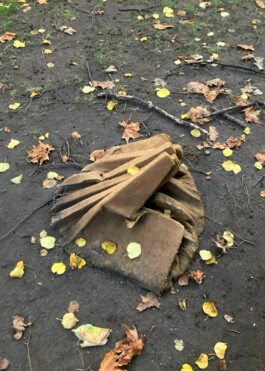
The ecological properties of clay have been fully preserved. All added materials are organic-based. The objects therefore remain recyclable and biodegradable.